
Last updated September 25, 2026
ADU Warning Signs: A Riverside Homeowner’s Reference Guide
The most common warning sign a Riverside ADU homeowner misses is not a bad weld or a cracked footing. It is a proposal dated before the contractor visited the lot, which means the scope is a guess and the price is a placeholder. In our experience across 900-plus ADU projects since 2015, the failures that cost $30,000 or more to fix rarely announce themselves with drama. They arrive as process omissions that look like normal business until the permit is rejected, the foundation is poured wrong, or the contractor stops returning calls. This guide catalogs the specific, observable signs any Riverside homeowner can check without construction expertise, and you can explore more guides & resources on our blog.
Quick Answer
ADU warning signs in Riverside fall into five categories: pre-contract red flags like quotes before site visits and vague “allowance” pricing; design-phase gaps like missing Riverside Municipal Code citations and absent Title 24 documentation; permit-phase stalls like an inability to name your assigned plan-checker; construction-phase problems like unannounced inspections and mystery subcontractors; and financial irregularities like draw requests ahead of verified work. Each category has specific, checkable indicators.
Table of Contents
- Pre-Contract Warning Signs: Before You Sign Anything
- Design-Phase Warning Signs: Drawings and Documentation
- Permit-Phase Warning Signs: Riverside Building & Safety
- Construction-Phase Warning Signs: On-Site Red Flags
- Financial Warning Signs: Money Moving the Wrong Way
- Riverside-Specific Risks: Climate, Code, and Market Realities
- Common Mistakes to Avoid
- When to Call a Professional
- Frequently Asked Questions
- The Bottom Line
Pre-Contract Warning Signs: Before You Sign Anything
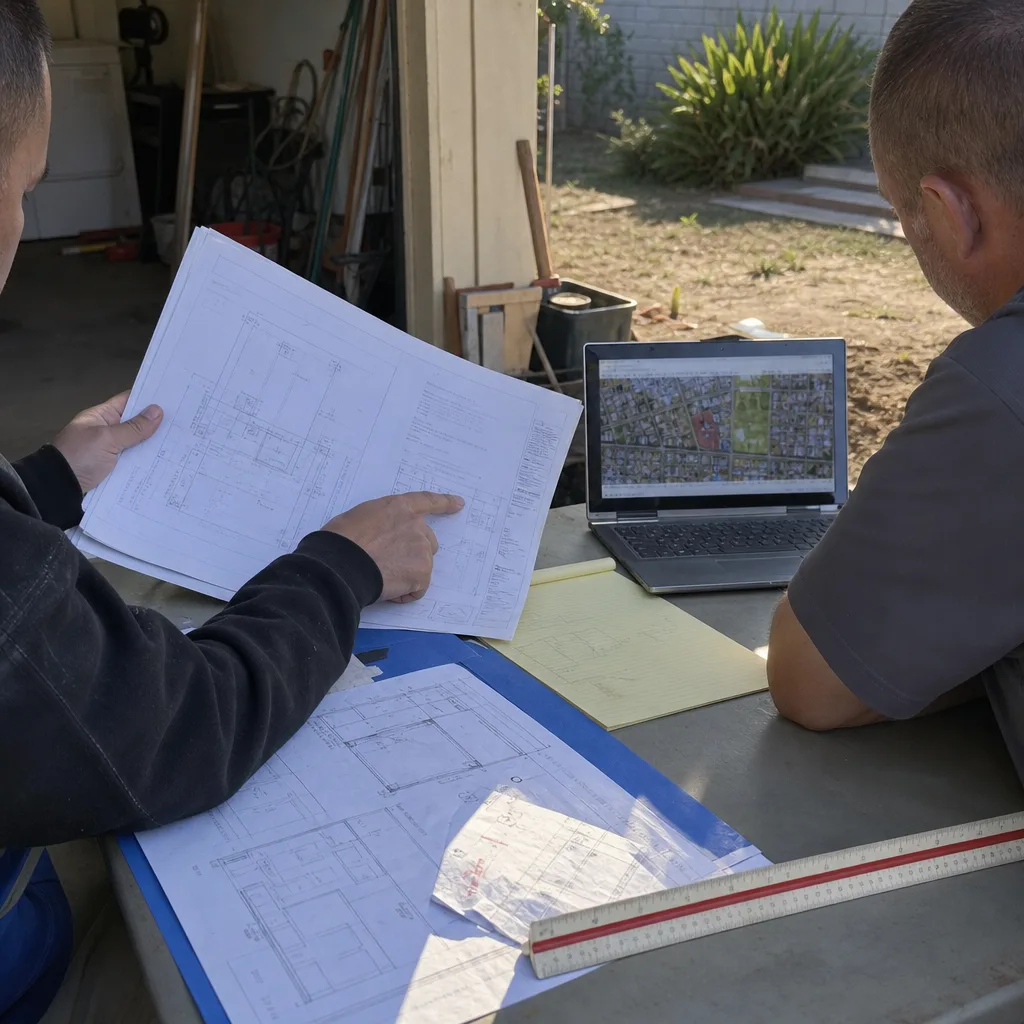
The pre-contract phase is where most Riverside ADU projects are won or lost, and the warning signs are deceptively ordinary-The Complete Guide to ADU in Riverside covers additional local considerations in depth. A contractor who delivers a detailed-looking proposal without stepping onto your property is not being efficient. They are pricing a hypothetical structure on a hypothetical lot, and the gap between that fiction and your actual conditions in Riverside’s varied terrain, from the alluvial flats near the Santa Ana River to the hillside lots in Canyon Crest, will become your cost overrun.
Here are the specific pre-contract warning signs to check:
- A proposal dated before the site visit. Check the date on the first page against the date the contractor walked your property. If the proposal predates the visit, every line item is an estimate of an estimate.
- No mention of Riverside-specific utility connection fees. Western Municipal Water District, Riverside Public Utilities, and Southern California Gas each have distinct connection fee schedules for ADUs. A legitimate proposal names the utility and the estimated fee range. Silence here means the contractor either does not know or does not plan to pay it.
- Contracts with “allowances” in lieu of specified line items. An allowance is a budget placeholder, not a price. Under Haven Standard Clause 1, every project receives a written price before work starts, with specified materials and fixed quantities. If your contract reads “tile allowance: $3,000” without naming the manufacturer, grade, and square footage covered, you have purchased a variable-cost project disguised as a fixed one.
- No discussion of soil conditions or existing foundation evaluation. Riverside’s expansive clay soils in the Arlington and La Sierra areas behave differently from the sandy loam near Victoria Avenue. A contractor who does not mention soil or foundation assessment is assuming your lot matches their template.
- Absence of a written scope tied to a permit set. In a design-build model like ADU Design & Permitting in Riverside, the drawings and the construction contract reference each other directly. If the proposal references no drawings, or references drawings you have not seen, there is no fixed scope to enforce.
We have reviewed competitor proposals for Riverside homeowners seeking our Ellery ADU Studio Riverside home Free Second Opinion. The most common pattern: a two-page proposal with a single bottom-line number, no permit timeline, no utility specifics, and a signature line. That document protects the contractor, not the homeowner.
Design-Phase Warning Signs: Drawings and Documentation
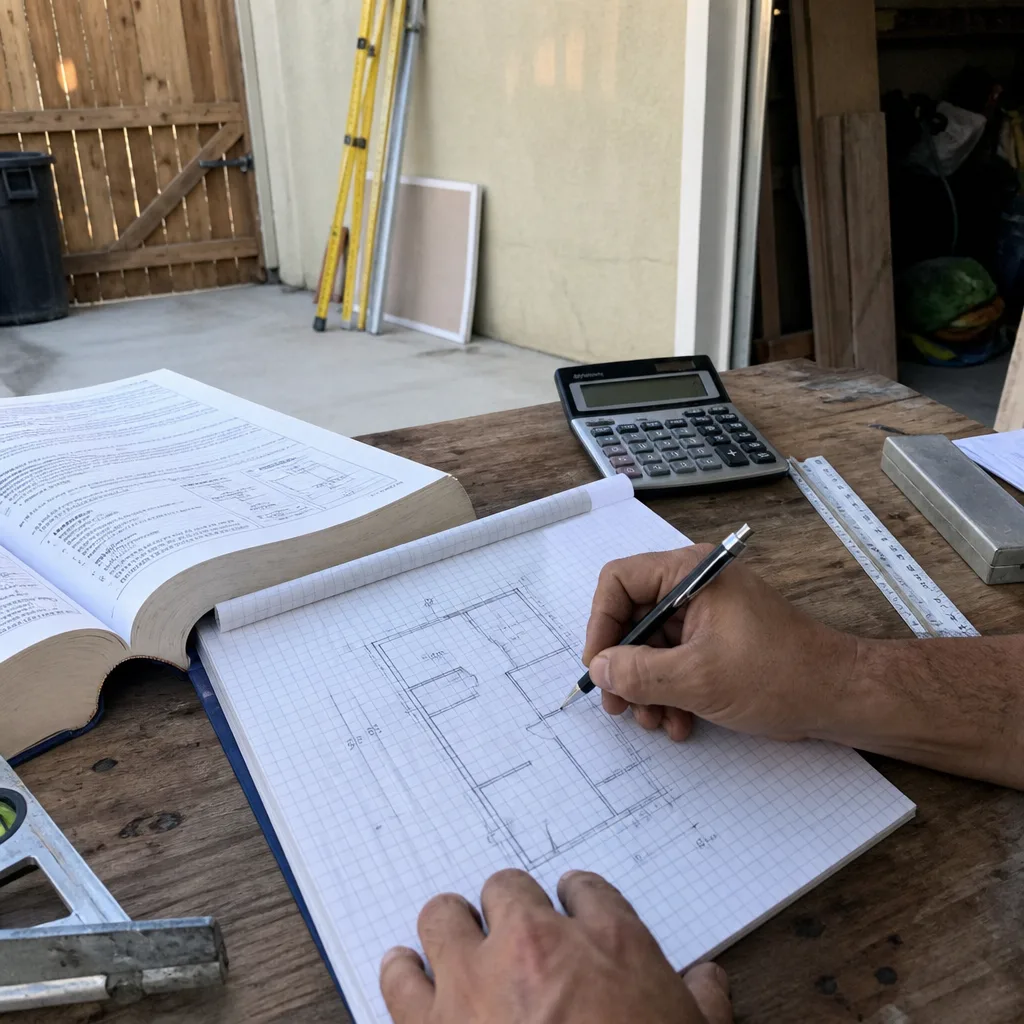
The design phase is where Ellery ADU Studio invests the majority of early project hours, because the permit set is the core product, not an afterthought. A deficient permit set will fail plan check repeatedly, and each resubmission costs 4-8 weeks in Riverside’s current queue. Here is what to look for.
Drawings that do not reference Riverside Municipal Code sections. Riverside’s ADU ordinance adopts state law with local modifications on parking, height, and setback. A legitimate permit set cites the specific code section governing each design decision: RMC 19.300 for accessory dwelling units, RMC 19.510 for parking reductions, RMC 16.04 for building code amendments. Generic drawings with no local code citations are designed for anywhere, which means they are designed for nowhere specific.
No Title 24 energy compliance documentation. California’s Energy Code requires every ADU to demonstrate compliance through either prescriptive packages or performance modeling. The permit set must include the CF-1R form (for new construction) or MF-1R form (for alterations), signed by a certified energy analyst. We have seen permit sets submitted to Riverside Building & Safety with a note reading “Title 24 TBD” or “to be completed by contractor.” That is a rejection waiting to happen.
Missing fire separation details for garage conversions. Garage Conversion ADU in Riverside requires specific fire-rated assemblies between the dwelling unit and the garage space, including 5/8-inch Type X gypsum on the garage side and self-closing doors. Drawings that show a simple wall section without the UL assembly number or the specific Riverside amendment are incomplete.
No structural calculations for hillside or soft-story conditions. Riverside’s canyon neighborhoods, Wood Streets and parts of Magnolia Center included, have sloped lots requiring retaining wall analysis or foundation tie-downs. A standard foundation detail with no site-specific engineering is a warning sign that the designer has not analyzed your actual conditions.
Absence of a drainage plan addressing Riverside’s intermittent heavy rainfall. The city receives concentrated winter storms that overwhelm undersized site drainage. A proper permit set includes surface flow calculations and, where necessary, infiltration trenches or dry wells sized to local hydrology.
Permit-Phase Warning Signs: Riverside Building & Safety
Permit phase delays are common in Riverside, but there is a critical difference between systemic delay and contractor disorganization. The warning signs below help you distinguish.
A contractor who cannot name the Riverside Building & Safety plan-checker assigned to your project. After initial submittal, every project receives a plan-checker identifier. A contractor who refers only to “the city” or “permitting is slow” without naming the individual, the review round, and the specific comments outstanding, is not actively managing the process. At Ellery ADU Studio, we log every plan-checker comment, respond in writing, and share the correspondence with the homeowner.
The phrase “permits are taking forever” without a specific timeline. Riverside Building & Safety publishes target review timeframes: 10 business days for initial ADU plan check, 5 business days for resubmittals. A contractor using vague delay language without referencing these benchmarks is either uninformed or deflecting from their own documentation failures.
No permit status log or comment response tracking. Each plan-check round generates a formal comment letter. A professional operation maintains a running log: comment received, response drafted, revision drawn, resubmittal date. If your contractor cannot produce this log, they are not managing the permit; they are waiting for it.
Requests for payment before permit issuance. Under Haven Standard Clause 3, payment milestones are tied to verified progress, not to administrative milestones the contractor controls. A request for a “permit deposit” or “plan-check fee advance” beyond the actual city invoice amount is a cash-flow red flag.
Failure to coordinate prefab or modular documentation with the city. When specifying systems from brands like New Detached ADU in Riverside options such as Cover, Dvele, or Mighty Buildings, the manufacturer provides engineered drawings that must be integrated with the site plan and foundation design. A contractor who treats the prefab documentation as “the manufacturer’s problem” has misunderstood who holds the permit and the liability.
Construction-Phase Warning Signs: On-Site Red Flags
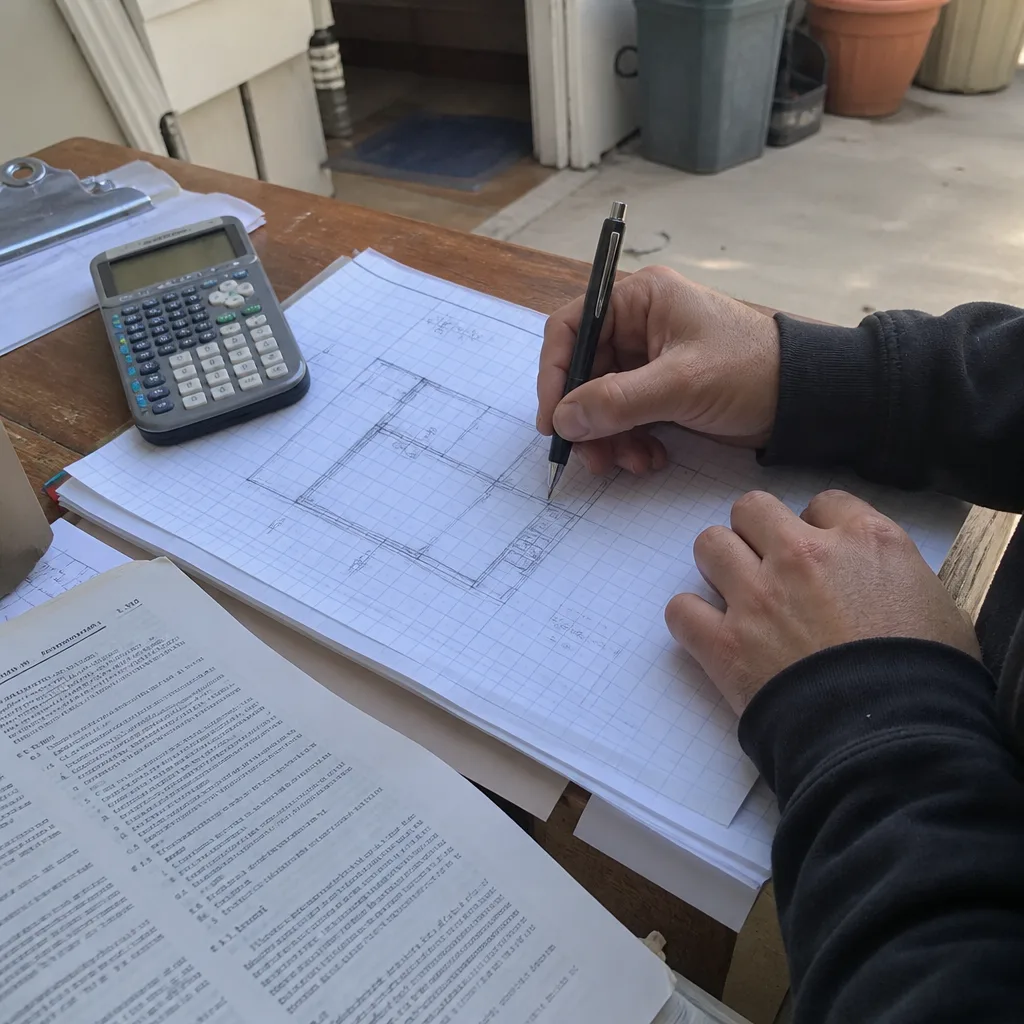
Construction-phase failures are the most visible, but by the time they appear, the homeowner is often financially committed, which is why DIY vs Professional ADU: The Riverside Homeowner’s Decision Guide matters before you start. These are the specific observations that should trigger immediate questions.
Inspections scheduled without homeowner notification. Riverside Building & Safety requires the permit holder or authorized agent to be present for certain inspections. More fundamentally, the homeowner has the right to know when their property is being inspected. Unannounced inspections suggest the contractor is managing the schedule for their convenience, not for transparency.
Subcontractors who do not know who the general contractor is. Ask the electrician or plumber on site: “Who is your general contractor?” The answer should be immediate and specific. Vague responses, different company names, or “I’m just here for the day” indicate either illegal unlicensed operation or a general contractor who has lost control of the job.
Material substitutions presented as “upgrades” without prior written approval. A change in specified materials requires a formal change order with cost implications stated. Framing a substitution as an upgrade avoids the change-order process and obscures whether the original material was ever ordered. Under Haven Standard Clause 5, the scope is locked at signing; no door-side upsells, no scope creep.
Work proceeding without visible permit placard or approved plans on site. Riverside requires the approved permit set and the job card to be accessible on site during all work hours. Their absence is both a code violation and an indicator that the work may not match the approved drawings.
Foundation work without prior verification against the geotechnical report. In Riverside’s expansive soil zones, the geotechnical report specifies footing depth, reinforcement, and drainage requirements. A crew that begins excavation without referencing the report, or without a report at all, is building on assumption.
Utility trenching without call-before-you-dig verification. Underground Service Alert (USA North 811) is legally required and practically essential in Riverside’s dense utility corridors. Trenching without the marked utilities is a safety violation and a liability exposure.
Financial Warning Signs: Money Moving the Wrong Way
Financial red flags in ADU construction are not about high prices; they are about money moving without corresponding verified value. A high, transparent price with documented progress is safer than a low price with vague draws.
Draw requests that outpace verified completed work. Standard practice ties draws to inspection milestones: foundation complete, framing complete, mechanical/electrical/plumbing rough-in passed, final inspection. A request for the third draw when only the first inspection has passed is a cash-flow problem disguised as project progress.
Invoices without line-item detail. Every invoice should reference the contract line items, the percentage or quantity completed, and the corresponding inspection or photo documentation. A lump-sum invoice with no backup is unverifiable.
Requests to pay subcontractors directly. This practice, sometimes framed as “saving you money,” severs the contractual chain. If you pay the plumber directly and the plumber abandons the job, you have no recourse through the general contractor’s bond. Worse, direct payment can create mechanics lien exposure from unpaid lower-tier subcontractors.
Pressure to release final payment before Certificate of Occupancy. Final payment should be contingent on passing final inspection, receiving the Certificate of Occupancy, and completing punch-list items. Any pressure to release funds early is a warning that the contractor anticipates difficulty closing the job.
Absence of a documented photo record with each draw request. At Ellery ADU Studio, every site visit generates a documented photo record that the homeowner receives, showing what was found and what was done. A draw request with no visual evidence is a request for trust without verification.
Riverside-Specific Risks: Climate, Code, and Market Realities
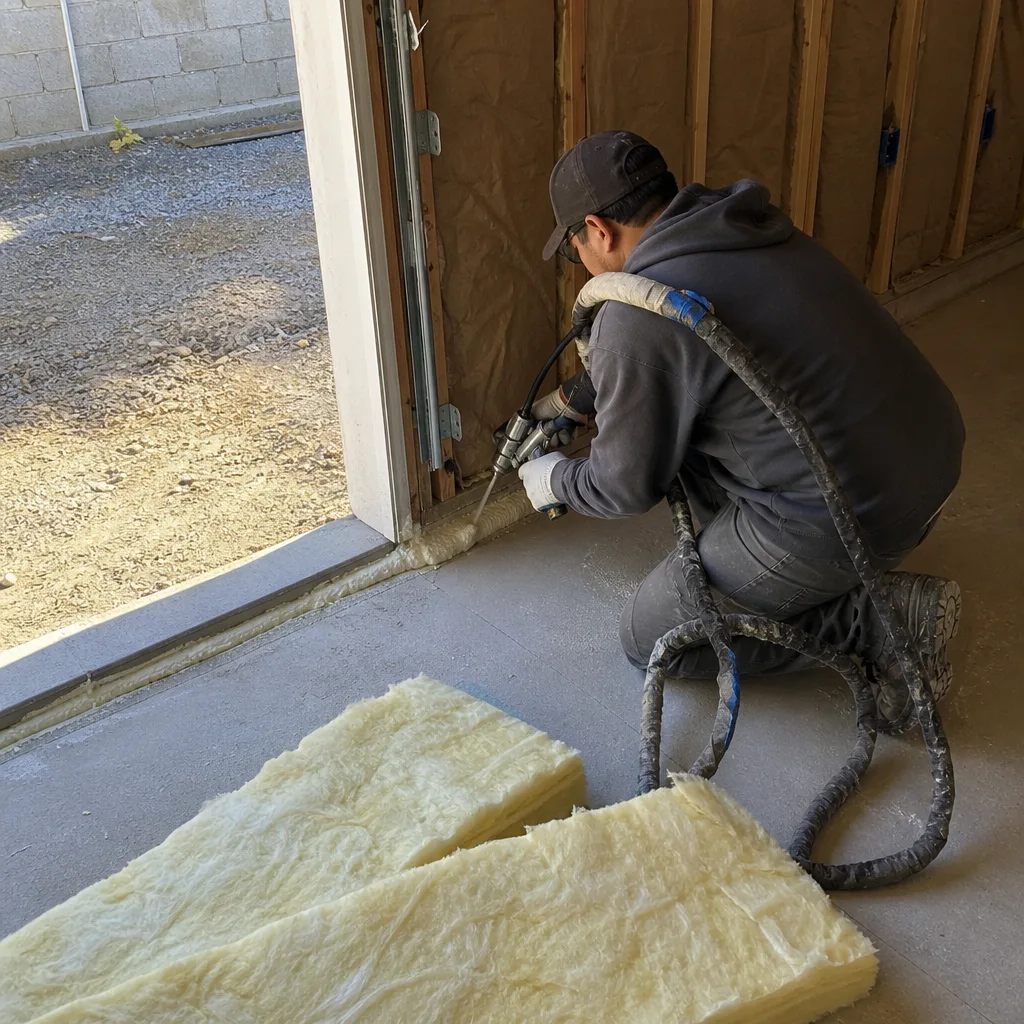
Riverside’s particular conditions create ADU risks that generic guides miss. Understanding these local factors helps homeowners ask better questions.
Climate-driven material selection. Riverside’s inland empire location means summer temperatures above 100°F, intense UV exposure, and occasional Santa Ana wind events. Roofing materials specified for coastal California degrade prematurely here. Windows without proper solar heat gain coefficient (SHGC) ratings create cooling loads that Title 24 compliance calculations may not capture if the energy analyst used default assumptions. We specify James Hardie fiber-cement siding on many Riverside projects specifically for thermal stability and fire resistance in this climate.
Septic system limitations in unincorporated areas. Riverside County’s septic requirements for ADUs are more restrictive than the city’s sewer connections. An ADU that the city would approve on sewer may fail county septic review. Proposals that do not distinguish between sewer and septic, or that assume sewer availability without verification, are operating on hope.
Historic district overlay requirements. Parts of downtown Riverside, including the Mission Inn neighborhood, carry historic preservation review for exterior modifications. A contractor who does not mention the Historic Preservation Overlay Zone (HPOZ) process is unaware of a potential 6-12 week additional review.
Fire hazard severity zones. The foothill areas of Riverside, including sections of Orangecrest and Woodcrest, fall within Cal Fire-designated Very High Fire Hazard Severity Zones. ADU construction in these zones requires enhanced ignition-resistant construction, extended defensible space, and often additional review. Standard construction details without wildfire amendments will fail plan check.
Utility capacity constraints in older neighborhoods. The Wood Streets and Magnolia Center areas have aging electrical infrastructure. A 400-amp service upgrade for a main house plus ADU may require Southern California Edison infrastructure work with 8-16 week lead times. A proposal that assumes immediate electrical availability has not checked.
Prefabricated system coordination with local amendments. Brands like Boxabl market rapid deployment, but Riverside’s foundation requirements, utility connection standards, and inspection protocols still apply. A proposal that treats prefab delivery as the project endpoint, rather than the beginning of site integration, underestimates the local work remaining.
Common Mistakes to Avoid
- Accepting a “verbal ballpark” as a planning tool. A verbal estimate is not a price; it is a recruiting tactic. Use it only to filter contractors who will not commit to written pricing.
- Assuming the lowest initial proposal saves money. In our 900-plus project history, the lowest initial proposal correlates with the highest final cost. Unspecified allowances, missed utility fees, and change orders accumulate where the initial scope was thin.
- Neglecting to verify the contractor’s license status at CSLB. Check the California State License Board for active status, bond history, and disciplinary actions. A license “pending” or held by an inactive entity is not a license.
- Failing to request a reference project in a similar Riverside neighborhood. An ADU in a flat, sewer-connected lot near Tyler Mall involves different challenges from a hillside project in Canyon Crest. Relevant experience matters.
- Signing a contract without a defined permit submittal date. Open-ended timelines protect the contractor. A specific submittal date, with consequences for delay, protects the homeowner.
- Overlooking the absence of a written warranty. The 365-Day Done Right Promise at Ellery ADU Studio is backed in writing before the project starts. A contractor who promises quality without documenting the promise is promising nothing enforceable.
- Ignoring the subcontractor payment verification process. Request proof that subcontractors and material suppliers have been paid through each draw. Unpaid subcontractors can file mechanics liens against your property regardless of what you paid the general contractor.
When to Call a Professional
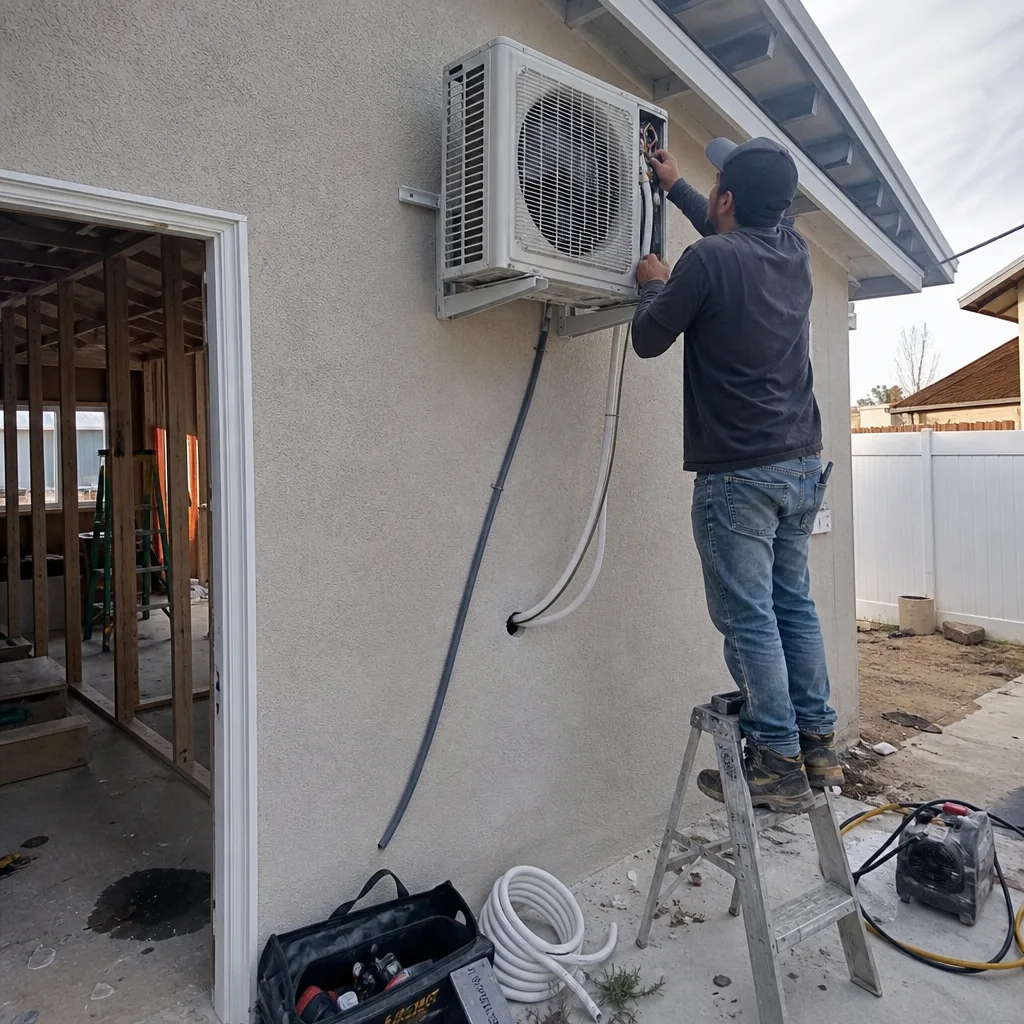
Call for independent review when any of the following apply: you have received a proposal you do not fully understand; your contractor has stopped providing written updates; an inspection has failed twice for the same deficiency; or you are being asked to pay ahead of verified progress. If you’re unsure how to evaluate your contractor, see How to Hire a ADU Contractor in Riverside: A Step-by-Step Guide. Ellery ADU Studio Riverside offers free estimates in Riverside, and our Free Second Opinion applies to any written estimate already in hand. We will read the proposal, visit the site, and tell you what we find, not what we felt. Call (951) 418-2910.
Frequently Asked Questions
Garage conversion ADUs in Riverside typically run $85,000-$165,000 all-in, drawings through final inspection, while new detached ADUs range from $220,000-$380,000 depending on size, utility complexity, and site conditions. Every project at Ellery ADU Studio receives a written price before any work starts, per Haven Standard Clause 1. Call (951) 418-2910 for an exact quote on your specific property.
A proposal delivered before the contractor visits the lot, which means every line item is an unverified assumption and the price is a placeholder. In Riverside’s varied terrain and utility environments, site-specific conditions change project scope significantly.
Riverside Building & Safety targets 10 business days for initial ADU plan check and 5 business days for resubmittals, though complex projects or those in historic or hillside zones may require additional review rounds. A contractor who cannot specify where your project stands in this timeline is not actively managing the permit process.
No legitimate design-build contract requires significant pre-permit payment beyond the actual city application fees. Payment milestones should tie to verified progress, not administrative steps the contractor controls. Under Haven Standard Clause 3, draws align with inspection-passed milestones.
You should receive a documented photo record on every site visit, inspection results with city documentation, and line-item invoices referencing the original contract scope. At Ellery ADU Studio, clients receive evidence of what was found and what was done, not a summary of how it felt.
Yes, prefab and modular systems from brands including Cover, Dvele, and Mighty Buildings can be specified and coordinated in Riverside, but the manufacturer’s engineered drawings must be integrated with site-specific foundation, utility, and drainage design, and all local inspection protocols still apply. The prefab delivery is not the project endpoint.
The Bottom Line
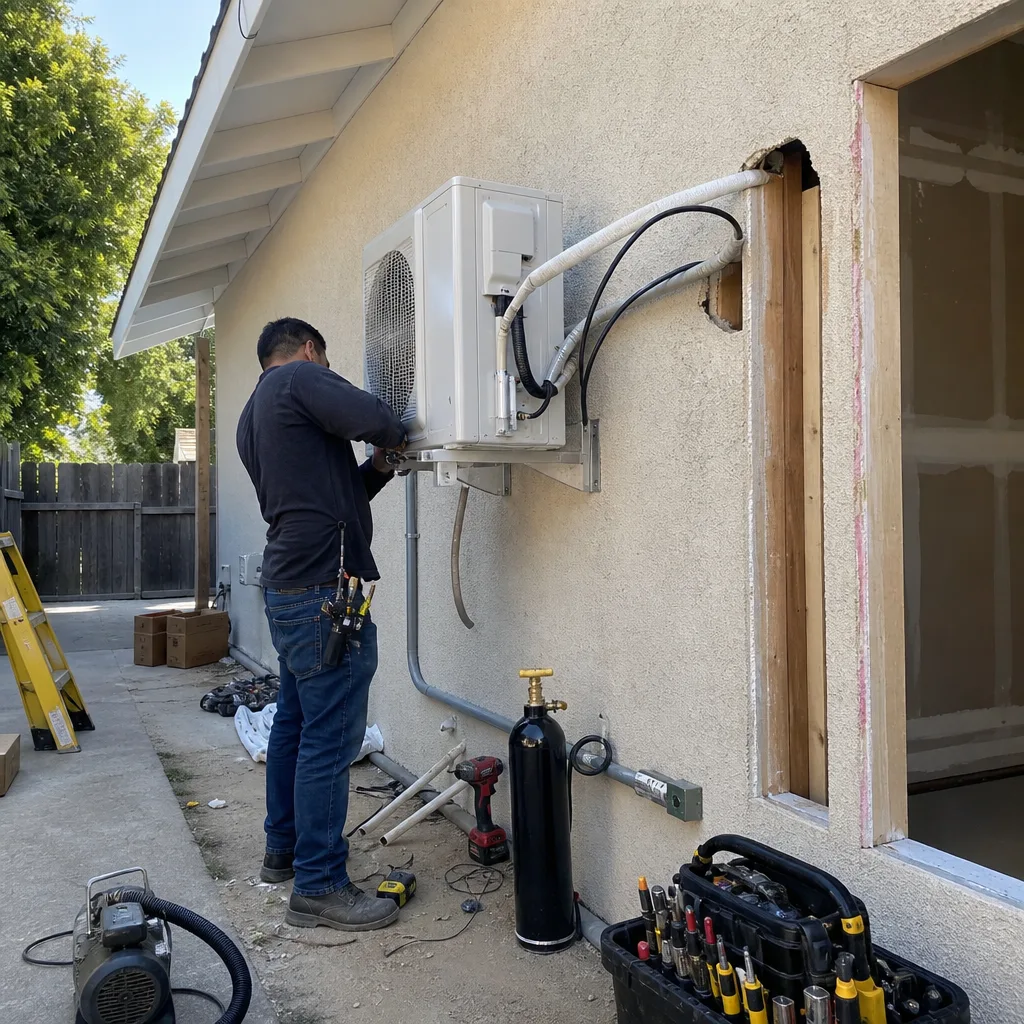
ADU project failures in Riverside do not arrive with drama. They arrive as missing documentation, unspecified pricing, unverified assumptions, and communication that gradually goes silent. The warning signs in this guide are checkable without construction expertise: dates on proposals, code citations on drawings, named plan-checkers, photo records with draws, and subcontractors who know who they work for. The homeowners who avoid costly failures are not those with the most technical knowledge, but those who demand specific evidence at each phase and recognize when that evidence is absent.
Written by Nadia Ellery, Owner at Ellery ADU Studio Riverside, serving Riverside since 2015.