
Last updated September 25, 2026
How to Hire a ADU Contractor in Riverside: A Step-by-Step Guide
California’s Contractors State License Board lists over 400 active general contractors in Riverside County. A valid CSLB license does not tell you whether the person holding it has ever pulled an ADU permit through Riverside Building & Safety specifically, which has its own plan-check conventions, its own backlog rhythms, and its own inspectors who flag what other jurisdictions pass. In this guide and our more guides & resources, you’ll learn why the phrase “hire an ADU contractor” is itself the first mistake, what contract structure actually protects your investment, and the five questions that separate firms who’ve built ADUs in Riverside from those who’ve merely built things near it.
Quick Answer
To hire an ADU contractor in Riverside, first determine whether you want a single design-build contract or separate design and construction contracts. Then verify the firm has closed at least one ADU permit through Riverside Building & Safety in the last 18 months, review a written proposal with fixed line-item pricing including Title 24 and permit fees, and check references for budget variance and timeline accuracy. The right contract structure matters more than the lowest bid.
Table of Contents
- The Two Contract Structures That Determine Your Risk
- Five Questions to Ask Any Riverside ADU Firm
- How to Read a Riverside ADU Proposal
- Reference Check Protocol: What to Ask Former Clients
- Riverside-Specific Red Flags
- Understanding Riverside’s ADU Permit Process
- What ADU Construction Costs in Riverside
- Common Mistakes to Avoid
- When to Call a Professional
- Frequently Asked Questions
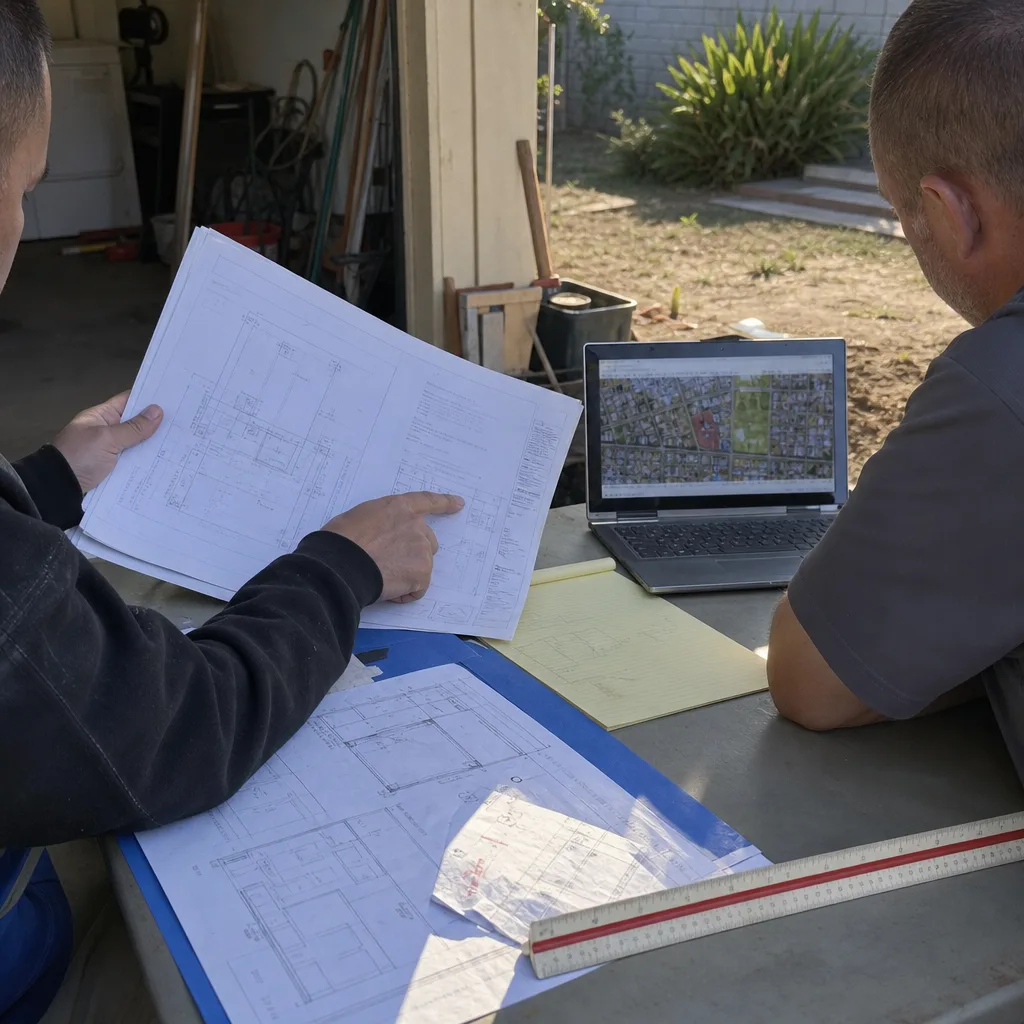
The Two Contract Structures That Determine Your Risk
Before you check a license number or compare bids, you need to choose between two fundamentally different ways to structure your project. This decision will determine who is accountable when the as-built ADU does not match the permitted drawings, when the city requests plan revisions, or when costs exceed the original estimate.
Design-Bid-Build: Separate Contracts
Most homeowners start here by default. They hire an architect or designer for drawings, then solicit bids from contractors to build from those drawings. Two contracts, two parties, one gap in the middle.
The problem is structural. When Riverside Building & Safety returns comments on your plan check, the designer and builder can each claim the issue falls in the other’s scope. When field conditions differ from the drawings, the builder issues a change order, and the homeowner pays because there is no single party accountable for the whole outcome. We’ve reviewed dozens of failed ADU projects in Riverside where the owner was caught between a designer who said “the builder deviated from my drawings” and a builder who said “the drawings were unbuildable.”
The separate-contract model also tends to produce higher total costs. The designer has no incentive to specify cost-efficient methods because they are not building it. The builder has no input during design, so value-engineering opportunities are lost.
Design-Build: Single Contract
A design-build studio, Ellery ADU Studio Riverside home, operates under one contract that covers ADU Design & Permitting, construction, and final inspection. The same entity that creates the permit set is responsible for building to it. There is no designer-versus-builder blame gap because they are the same party.
Under our Haven Standard, Clause 1, every project receives a written price before any work begins. Clause 5, No Surprises, locks the scope at signing. If Riverside Building & Safety requests plan revisions, we make them. If field conditions require adjustment, we absorb it within the written scope. The 365-Day Done Right Promise applies to the finished ADU against the permitted drawings, not against a separate designer’s intent.
For homeowners in Riverside’s older neighborhoods like Magnolia Center or Wood Streets, where lot conditions vary block by block, this matters. A 1920s foundation, a non-conforming setback, or an unpermitted prior addition all require design and construction knowledge to be held in the same hand.
Which Structure Fits Your Project?
- Choose design-bid-build if you have a complex, unique architectural vision and are willing to pay a premium for design autonomy plus the risk of coordination failures.
- Choose design-build if you want a fixed price, single point of accountability, and faster permit turnaround because the builder can flag constructability issues before submission.
Five Questions to Ask Any Riverside ADU Firm
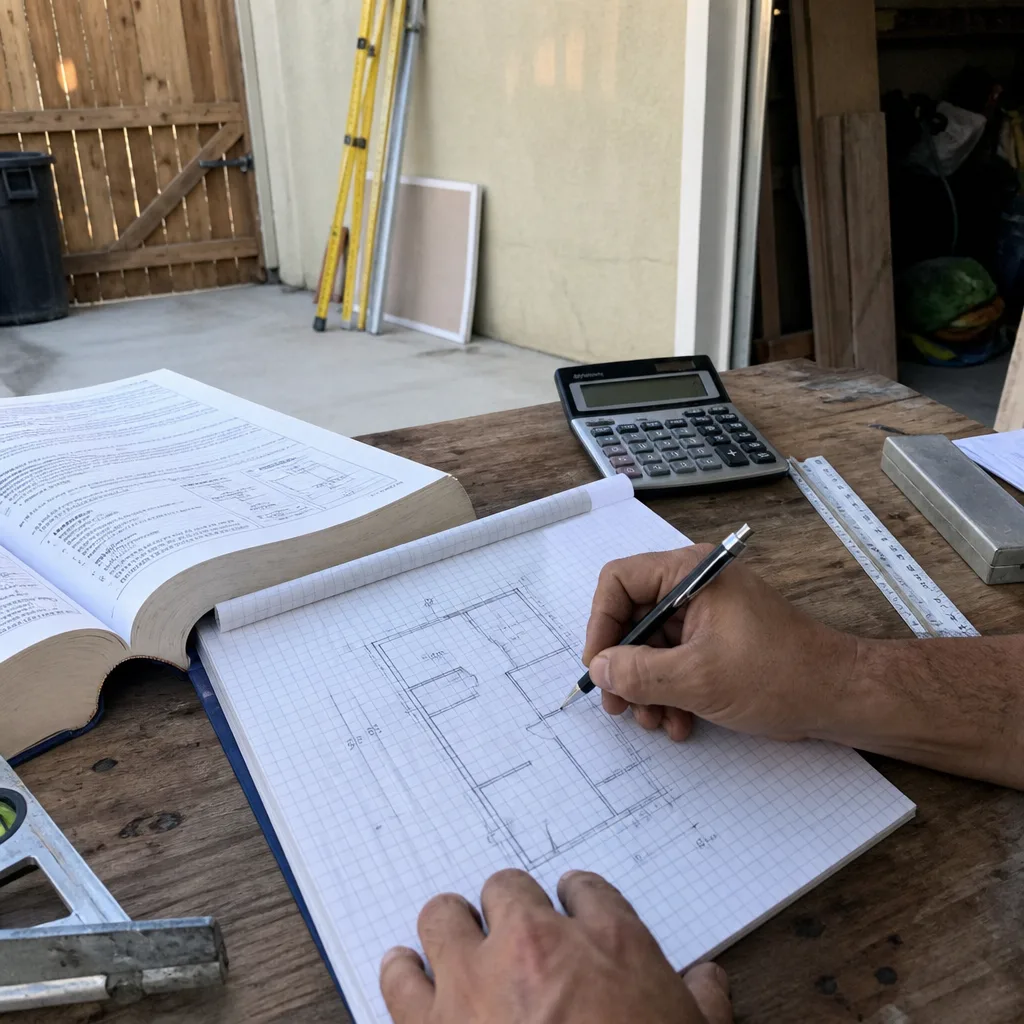
Once you’ve chosen your contract structure, use these questions to filter firms. The answers reveal whether they have actual ADU experience in Riverside or are generalists adapting a standard home-addition process.
1. Who signs the permit application?
In Riverside, the permit applicant must be the property owner or a licensed contractor with a valid CSLB number. If you are working with a designer who is not a licensed contractor, you will sign as the owner-builder or need to hire a separate contractor to pull the permit. This creates the accountability gap described above. Ask who takes legal responsibility for code compliance and inspection scheduling. At ADU Design & Permitting in Riverside, we pull permits under our license; the application bears our CSLB number and our signature.
2. Can I see a closed permit from a Riverside ADU you completed in the last 18 months?
A closed permit means the project passed final inspection and received a certificate of occupancy. Not “we’re working on one now.” Not “we’ve built in Corona and Moreno Valley.” Riverside Building & Safety has its own inspectors, its own interpretation of state ADU law, and its own backlog patterns. A firm with recent closed permits knows which plan checkers scrutinize fire separation details and which inspectors flag garage conversion ceiling heights. Ask for the permit number and verify it on Riverside’s public records portal.
3. What does your written price include, and what triggers a change order?
The answer should be specific: drawings, structural calculations, Title 24 energy compliance, permit fees, construction, final inspection, and cleanup. If the response includes “permit fees TBD” or “utility connection costs to be determined,” you do not have a fixed price. You have an estimate that will grow. Under Haven Standard Clause 1, our written price includes every line item from site survey through final inspection. Change orders arise only from owner-requested scope changes, not from conditions the firm should have identified during due diligence.
4. How do you handle Title 24 compliance?
California’s energy code is mandatory for all ADUs. In Riverside’s inland climate, with over 100 days above 90 degrees annually, cooling load calculations and insulation R-values matter. A firm that treats Title 24 as an afterthought will add $3,000-$8,000 in compliance costs mid-project. Ask whether they include a HERS rater in the initial scope or plan to subcontract that after framing. Our permit sets include Title 24 documentation from the first submission; we do not submit without it.
5. What documentation do I receive at project closeout?
You should receive: the final permit set with city approval stamps, a certificate of occupancy, photo documentation of concealed conditions (foundation, plumbing rough-in, electrical panel), and a written warranty. If the firm shrugs at this question, they are not documenting their work. Our documented photo record, delivered at closeout, shows what was found and what was done, not a summary of how it felt. This becomes critical if you sell the property and the buyer’s inspector asks about the ADU’s construction history.
How to Read a Riverside ADU Proposal
Proposals vary in format, but the line items reveal the firm’s intent. Here’s how to distinguish a fixed-scope price from a low-ball bid designed to expand via change orders.
Line Items That Signal a Complete Bid
| Line Item | What It Covers | Red Flag If Missing |
|---|---|---|
| Site survey & as-builts | Existing conditions documentation | Bid assumes your lot matches the assessor’s sketch |
| Soils report (if required) | Geotechnical evaluation for new foundations | Added later when the city requests it; $2,500-$5,000 |
| Title 24 energy compliance | HERS rating, insulation, HVAC sizing | “To be determined” or entirely absent |
| Permit fees | Riverside Building & Safety plan check and inspection fees | “TBD” or “paid by owner direct” |
| Utility connection fees | Water, sewer, electric service upgrades | Assumes existing service is adequate |
| Foundation | Slab, piers, or stem wall with rebar and concrete spec | Vague reference to “standard foundation” |
| Framing & structural | Lumber or steel, shear walls, hold-downs | No specification of seismic hardware grade |
| Fire separation (garage conversions) | 1-hour rated assembly between ADU and garage | Missing entirely; this is a code requirement |
| Final cleaning & walkthrough | Debris removal, punch list completion | “Owner responsible for cleanup” |
The Change Order Trap
A proposal that omits soils, Title 24, or utility connections is not cheaper. It is deferred. We’ve reviewed competitor bids for Riverside projects where the initial figure was $85,000 and the final invoice reached $140,000 through change orders for conditions that a site visit would have revealed. The Haven Standard, Clause 5, prohibits this: the scope is locked at signing. If we miss a condition during due diligence, we absorb it.
Look also for allowance items. An “allowance” of $8,000 for kitchen finishes means you pay the difference if your selections exceed that figure. A fixed-scope price specifies the cabinet line, the countertop material, and the appliance package, or it provides a product-level allowance with a clear upgrade path.
Reference Check Protocol: What to Ask Former Clients
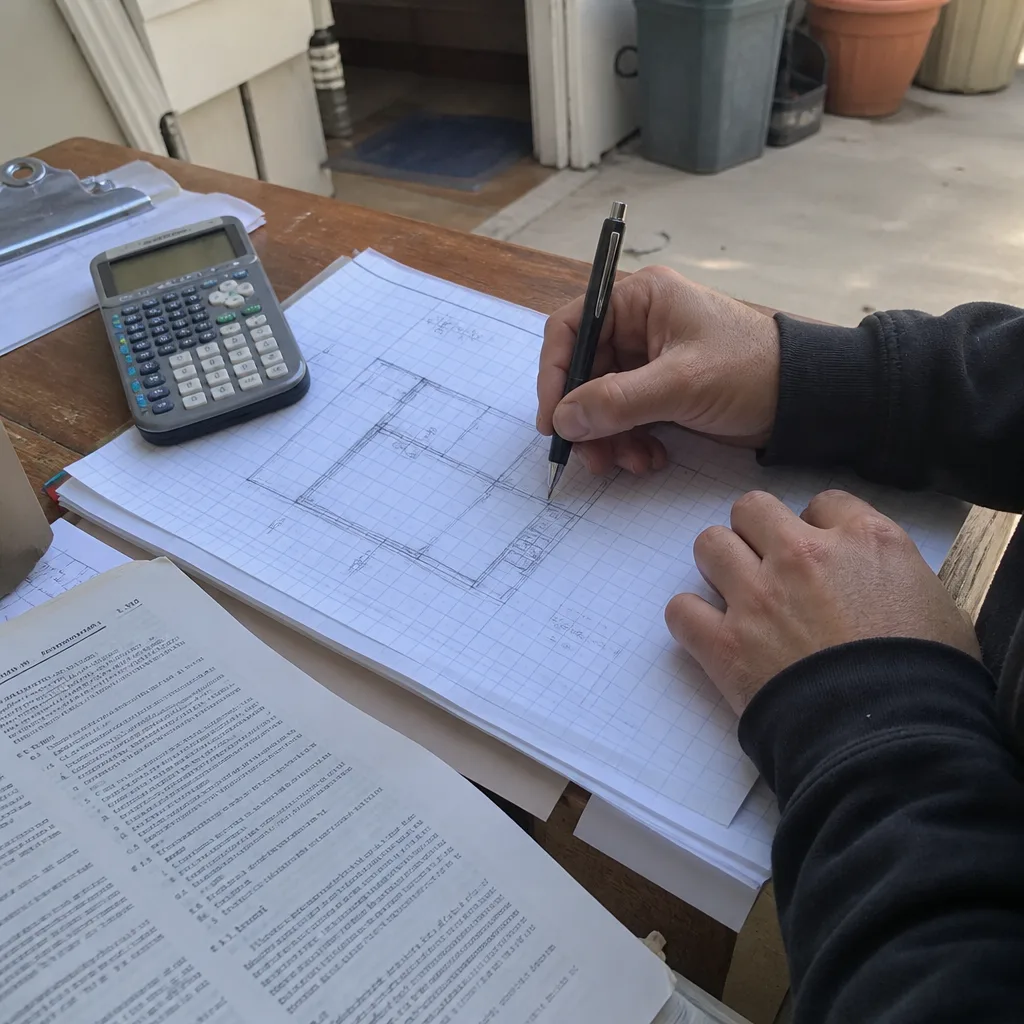
Most homeowners ask “were you happy?” and receive a polite answer. This tells you little. Use this structured protocol to surface the information that predicts your own experience.
Before You Call: Verify the Project
Ask the firm for the property address and permit number. Confirm the permit closed on Riverside’s public portal. If the firm will not provide this, stop. A closed permit is a public record; there is no confidentiality concern.
The Six Reference Questions
- What was your final cost versus the original written price? A variance under 5% indicates good estimating and scope control. Variances over 15% suggest change-order dependency or poor initial due diligence.
- How many days elapsed from permit application to certificate of occupancy? In Riverside, a garage conversion ADU typically takes 4-6 months; a new detached ADU, 8-14 months. Significant variance from these ranges indicates permit delays, inspection failures, or scheduling problems.
- Who resolved disputes with the city when they arose? The answer should be “the firm handled it” with specifics. If the owner had to make calls, appear at the counter, or hire additional help, the firm was not fully accountable.
- Did you receive a documented photo record of concealed work? Foundation, plumbing rough-in, electrical panel, insulation. These are not visible after closeout. Without photos, you have no evidence of code-compliant installation.
- Has anything required repair since completion, and how was it handled? This tests the warranty in practice, not in theory. A 365-Day Done Right Promise is only as good as the firm’s response when invoked.
- Would you hire them again for your next ADU? This is the net promoter question. Hesitation here, even with polite qualifiers, is more informative than enthusiasm about a completed project.
Ask for two references: one from 6-12 months post-completion, and one from 2+ years. Recent projects test execution; older projects test durability and warranty follow-through. We’ve provided references from 2017 ADUs in Riverside’s Eastside neighborhood where owners have since refinanced or sold, and the documented permit set and photo record smoothed both transactions.
Riverside-Specific Red Flags
Some warning signs are universal. Others are specific to Riverside’s market, climate, and regulatory environment.
Firms That Quote Before Visiting the Lot
Riverside’s housing stock spans pre-war bungalows in Wood Streets, mid-century ranch homes in Canyon Crest, and 1990s subdivisions in Orangecrest. Lot slope, utility locations, and existing foundation conditions vary enormously. A firm that provides a “ballpark” figure without a site visit is not estimating; they are marketing. Our process includes a site survey before any written price is issued. Haven Standard Clause 1 requires it.
Proposals Without a Title 24 Line Item
California’s energy code is not optional. In Riverside’s inland empire climate zone, with cooling degree days exceeding 2,000 annually, Title 24 compliance affects window specification, insulation depth, and HVAC sizing. A proposal that omits this line item either plans to add it later or does not understand ADU requirements.
Contracts That List “Permit Fees TBD”
Riverside Building & Safety publishes its fee schedule. A firm that cannot estimate permit costs has not pulled enough ADU permits to know the range. For a typical garage conversion, plan check and inspection fees run $1,200-$2,800. For a new detached ADU, $2,500-$5,500 depending on square footage and valuation. “TBD” means the firm is either inexperienced or deliberately understating total cost.
Prefab Claims Without Brand Specificity
Prefab and modular ADUs are increasingly popular in Riverside, where yard access and construction duration matter. But “we do prefab” is meaningless. Ask which systems they specify and coordinate. We work with New Detached ADU in Riverside projects using Cover, Dvele, and Mighty Buildings systems, integrated into the same single contract as site-built work. A firm that cannot name their prefab partners or explain how they handle foundation-to-module connection details is not actually delivering prefab; they are brokering it.
No Mention of Fire Separation for Garage Conversions
Riverside enforces the 1-hour fire-rated assembly between ADU and remaining garage space strictly. We’ve seen projects delayed 6-8 weeks because a contractor framed standard drywall, failed inspection, and had to rip it out. A Garage Conversion ADU in Riverside proposal must specify the fire-rated assembly, including the rated door if the garage remains in use.
Understanding Riverside’s ADU Permit Process
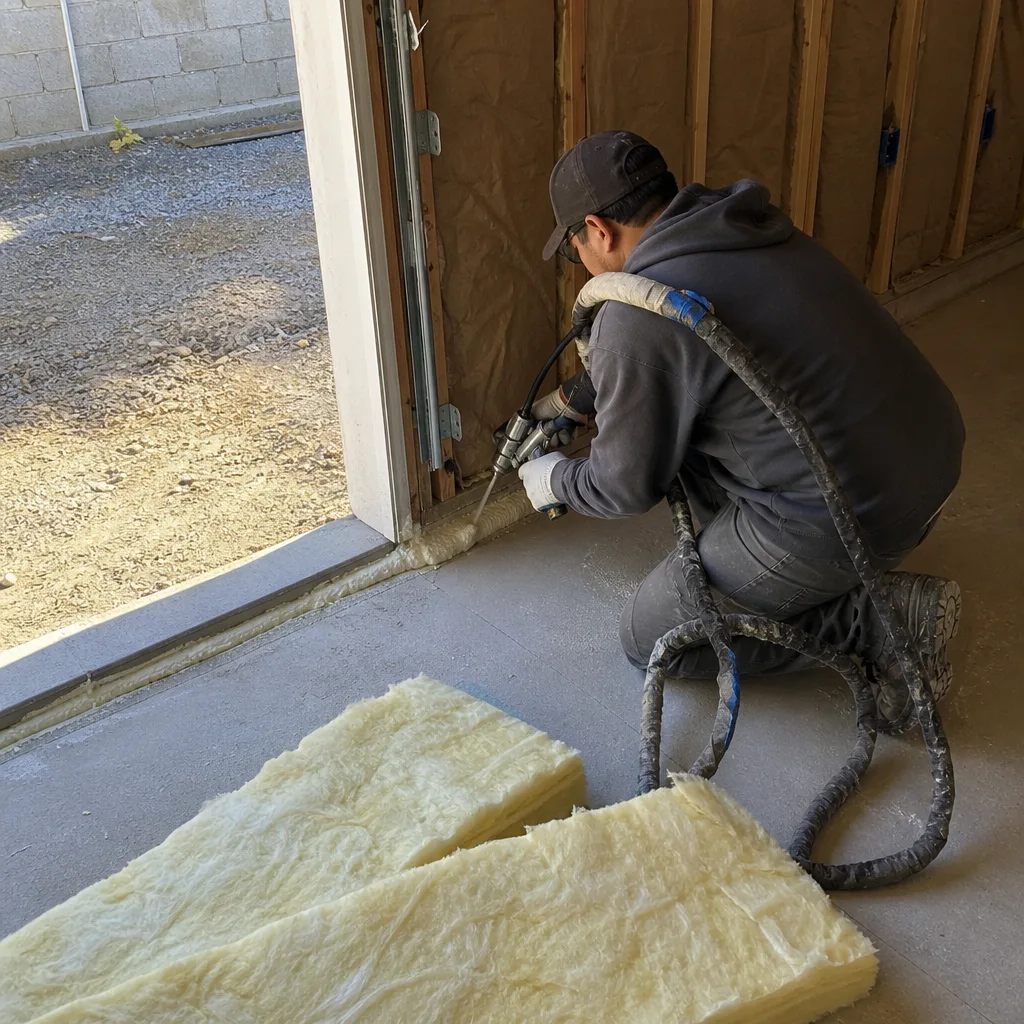
Knowing the permit timeline helps you evaluate firm claims and plan your financing. Riverside operates under state ADU law but applies local procedures that affect duration.
Pre-Application (2-4 Weeks)
Site survey, as-built documentation, and preliminary title report. For properties in Riverside’s historic districts or hillside zones, additional review may apply. We complete this phase before issuing a written price, so the permit set accounts for actual conditions.
Plan Check (4-12 Weeks)
Riverside Building & Safety targets 60 days for ADU plan check but achieves this only with complete, correct submittals. Common delays: missing Title 24 documentation, incorrect fire separation details, or utility service calculations that assume existing capacity without verification. Our permit sets are submitted only after internal review against Riverside’s most recent correction letters.
Construction & Inspection (3-10 Months)
Garage conversions move fastest because the envelope exists. New detached ADUs require foundation, framing, roofing, and utility trenching. In Riverside’s summer heat, concrete cures faster but crew productivity drops above 105 degrees; we schedule foundation pours for spring and fall when possible. Winter rains, though brief, can delay exterior work in December through February. See our Seasonal ADU Care for Riverside: Year-Round Homeowner’s Guide for additional seasonal planning tips.
Final Inspection & CO (2-4 Weeks)
The certificate of occupancy is the legal milestone that allows rental or occupancy. Without it, your ADU is uninsurable as a dwelling unit and cannot be legally rented. We do not consider a project complete until the CO is issued and delivered to the owner.
What ADU Construction Costs in Riverside
Price transparency is central to our practice. These ranges reflect our actual 2023-2025 project data for Riverside, including design, permitting, and construction, detailed further in our ADU Cost Breakdown: The Riverside Homeowner’s Reference for 2026. Every project received a written price before work began, per Haven Standard Clause 1.
| ADU Type | Size Range | All-In Cost Range | Typical Timeline |
|---|---|---|---|
| Garage Conversion ADU | 400-600 sq ft | $95,000-$165,000 | 4-6 months |
| Junior ADU (interior conversion) | 300-500 sq ft | $75,000-$135,000 | 3-5 months |
| New Detached ADU (site-built) | 500-1,200 sq ft | $195,000-$385,000 | 8-14 months |
| New Detached ADU (prefab/module) | 500-1,200 sq ft | $175,000-$340,000 | 6-10 months |
| ADU Site Prep & Utilities (if needed separately) | Varies by lot | $15,000-$55,000 | 1-3 months |
These ranges include design, structural engineering, Title 24, permit fees, construction, and final inspection. They do not include soft costs like financing, property tax reassessment planning, or rental property management setup.
Factors that push projects toward the high end: hillside lots requiring retaining walls, utility service upgrades beyond 200 amps, septic system expansion in unsewered areas of Riverside County’s periphery, and custom finishes specified after the written price is locked. Factors toward the low end: flat lots, existing adequate utilities, and standard finish packages selected at proposal stage.
We offer a Free Second Opinion on any written estimate already in hand. Bring us a competitor’s proposal and we will identify missing line items, allowance traps, and scope gaps, with no obligation to hire us.
Common Mistakes to Avoid
- Hiring based on the lowest initial bid. The lowest bid is often the most incomplete. In Riverside, we’ve seen $78,000 garage conversion bids balloon to $145,000 through omitted Title 24, unpriced fire separation, and “TBD” permit fees. Compare written scopes, not top-line numbers.
- Starting design before confirming buildability. Some homeowners pay an architect for full drawings, then discover the design exceeds setback requirements or requires a variance that Riverside rarely grants. A design-build process flags these constraints before design investment.
- Ignoring utility capacity. Riverside’s older neighborhoods, particularly in the downtown core and Magnolia Center, have 100-amp electrical service and original sewer laterals. An ADU adds load that existing systems may not handle. Verify before you commit to a design.
- Accepting verbal promises. “We’ll take care of permits” or “the price won’t change” mean nothing without a written contract clause. The Haven Standard exists because we’ve seen too many homeowners trust verbal assurances that evaporated when problems arose.
- Neglecting the rental income timeline. If you are financing the ADU, every month of delay is interest paid without rental income offsetting it. A firm with recent Riverside permit experience can estimate realistic timelines; a generalist cannot.
- Choosing prefab without understanding site coordination. Prefab modules from Cover, Dvele, or Mighty Buildings reduce on-site construction time but require precise foundation work, crane access, and utility rough-in timing. A firm that sells prefab as “easier” without explaining these dependencies is oversimplifying.
When to Call a Professional
Call a design-build ADU studio when you have confirmed your property qualifies under state ADU law and you want a single accountable party from first sketch to final inspection. This is particularly urgent if your lot has complicating factors: non-conforming setbacks, hillside location, unpermitted prior construction, or utility constraints. Ellery ADU Studio Riverside home offers free estimates in Riverside. A live person answers calls 24/7 at (951) 418-2910, and we provide a Free Second Opinion on any written estimate you have already received.
Frequently Asked Questions
Garage conversion ADUs typically run $95,000-$165,000 all-in, while new detached ADUs range from $175,000-$385,000 depending on size, site conditions, and finish level. Every project we quote receives a written price before any work begins, per Haven Standard Clause 1. Call (951) 418-2910 for an exact quote on your property.
Riverside Building & Safety targets 60 days for ADU plan check, but incomplete submittals or missing Title 24 documentation can extend this to 12-16 weeks. Construction duration adds 3-14 months depending on ADU type. A firm with recent Riverside permit experience will know the current backlog and inspector preferences. Call (951) 418-2910 to discuss timeline specifics for your project.
Under a fixed-scope design-build contract with Haven Standard Clause 5, the price does not change unless you request a scope modification. Change orders triggered by conditions the firm should have identified during due diligence are not passed to the owner. We lock the scope at signing and absorb predictable variance.
We pull all permits under our CSLB license. The application bears our license number and our signature, and we are legally accountable for code compliance and inspection scheduling. You receive the closed permit and certificate of occupancy at project completion.
We provide addresses and permit numbers for closed projects, which you can verify on Riverside’s public records portal. We also share the documented photo record from representative projects showing foundation, framing, and finish conditions. References from 2017-2024 projects are available on request.
A garage conversion ADU repurposes an existing structure, typically costing less and permitting faster, but requires fire separation from any remaining garage space and may trigger utility upgrades. A new detached ADU is built from the ground up, offering more design flexibility but requiring full foundation, roofing, and utility infrastructure. In Riverside’s inland heat, new detached units allow optimal orientation and insulation for cooling efficiency. Both are covered under our single-contract design-build model.
The Bottom Line
Hiring for an ADU in Riverside is not about finding a contractor with a license. It is about choosing a contract structure that eliminates the designer-builder accountability gap, then verifying that your chosen firm has actual, recent, closed-permit experience with Riverside Building & Safety. Read proposals for completeness, not just total cost. Check references for budget variance and dispute resolution, not satisfaction. And demand written documentation at every stage: the permit set, the photo record, and the warranty. The firms that deliver these without prompting are the ones that will deliver your ADU without surprises.
Written by Nadia Ellery, Owner at Ellery ADU Studio Riverside, serving Riverside since 2015.