
HOA & Zoning Compliance in Riverside, CA
ADU Design & Permitting in Riverside means resolving two separate approval tracks – your homeowners association’s architectural review board and the City of Riverside’s planning and building departments – before a single Permit Application gets issued. Most projects that stall between design and construction stall here. At Ellery ADU Studio, we handle both tracks inside the same design-build contract, so you’re not left coordinating between your architect, your builder, and your HOA reviewer while each one waits on the other.
If you’re early in the process, start with our ADU Design & Permitting in Riverside overview, which explains how the full permit set comes together. This page covers the compliance layer specifically – what it involves, what it costs, and why getting it right before drawings are finalized saves real money.
Questions right now? Call (951) 418-2910. A live person picks up – no voicemail queue.
When You Need HOA & Zoning Compliance
Not every Riverside homeowner needs HOA coordination, but nearly every one needs zoning review before an ADU can be permitted. Here are the situations we see most often:
- Your property sits inside an HOA community. Neighborhoods like Orangecrest, Victoria Grove, and Canyon Crest frequently have CC&Rs – covenants, conditions, and restrictions – that set design standards on materials, roof pitch, and exterior color. Those standards don’t disappear because state ADU law exists; they apply to anything visible from common areas or neighboring lots, and an architectural review board denial can delay a project by two to four months.
- Your lot is in a hillside or flood-overlay zone. Riverside’s FEMA-mapped flood zones along the Santa Ana River corridor and the hillside grading requirements in areas like Hawarden Hills add a separate planning layer that has to be addressed before building permits are issued.
- Your setbacks don’t obviously accommodate the ADU footprint you want. City of Riverside zoning requires four-foot rear and side setbacks for most ADUs. On a standard 6,000-square-foot lot in a neighborhood like Arlanza or La Sierra, those setbacks can cut the buildable envelope significantly. We calculate the actual buildable area from your parcel data before any design work is priced.
- You received a comment letter from the City’s planning department. A comment letter – sometimes called a “completeness letter” – means your initial submittal had items the reviewer couldn’t approve as submitted. These are fixable, but every revision cycle adds three to six weeks to your timeline in Riverside’s current queue.
- You’re converting a garage or adding a Junior ADU and the HOA says it changes the property’s appearance. HOAs regularly flag garage conversions in neighborhoods like Wood Streets or Magnolia Center because the street-facing elevation changes. State law limits what an HOA can prohibit, but the process of documenting that limit and getting the board to acknowledge it takes deliberate preparation.
- You bought a property with a non-conforming structure or an unpermitted addition. Riverside’s planning department requires those to be addressed or documented as part of any new ADU application. We’ve worked through this on dozens of older parcels in the University and Arlington neighborhoods, where mid-century additions rarely had permits pulled.
Our HOA & Zoning Compliance Process
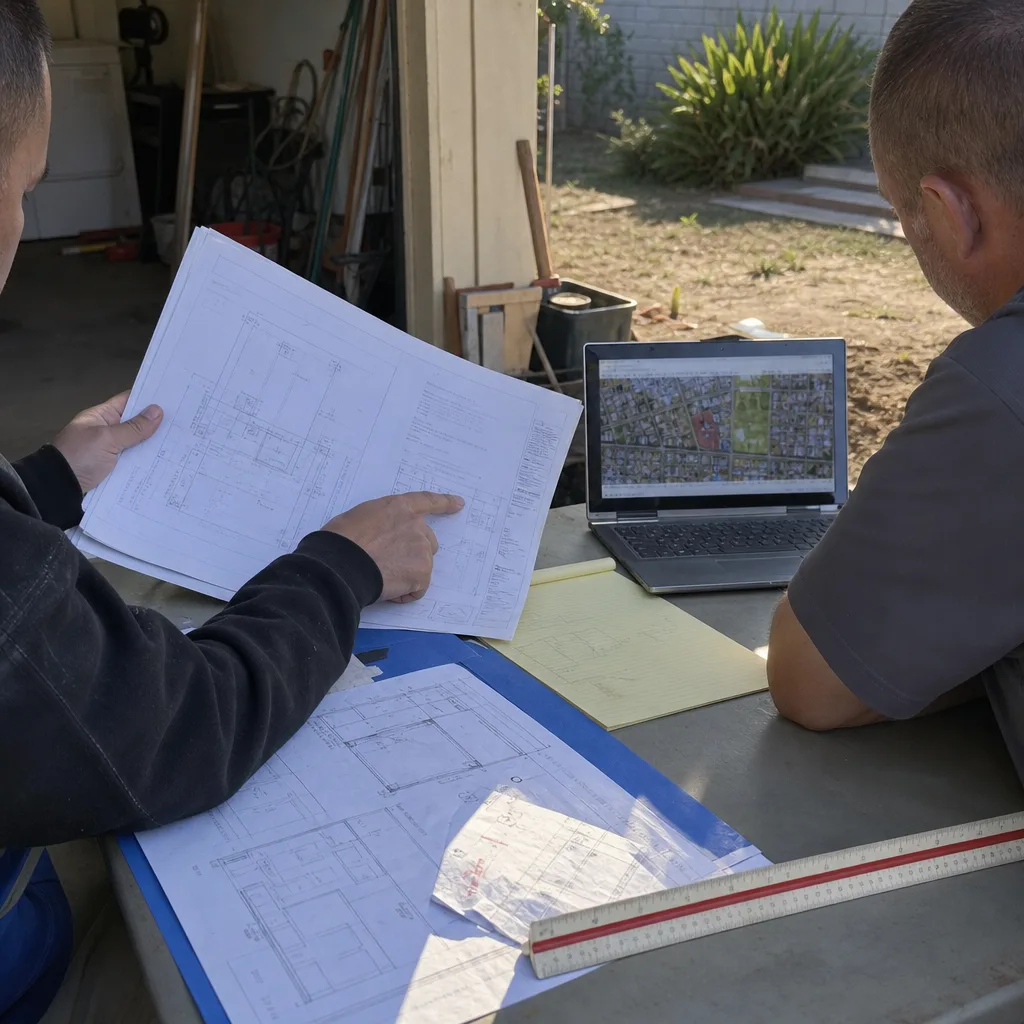
Every step below happens inside your single Ellery ADU Studio contract. You don’t hire a separate consultant for the HOA review and a separate designer for the zoning analysis. Nadia Ellery reviews every file before it goes out.
- Parcel and CC&R Pull. We order the current assessor parcel data for your Riverside address and obtain your HOA’s recorded CC&Rs from the Riverside County Recorder’s Office. We’re reading the actual recorded document, not the HOA’s summary handout – those two things are not always the same. We also confirm which zoning district your lot sits in (residential, mixed-use overlay, hillside, etc.) using the City of Riverside’s official GIS layers.
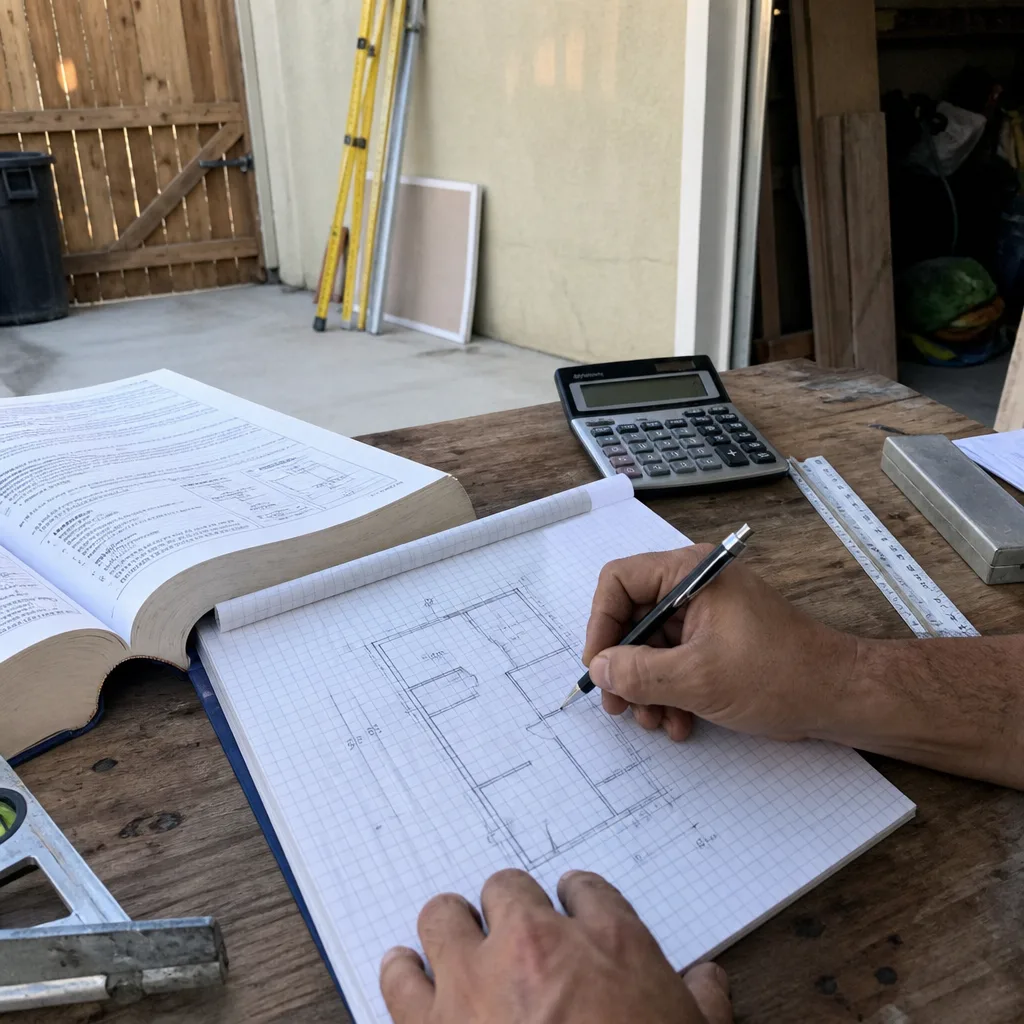
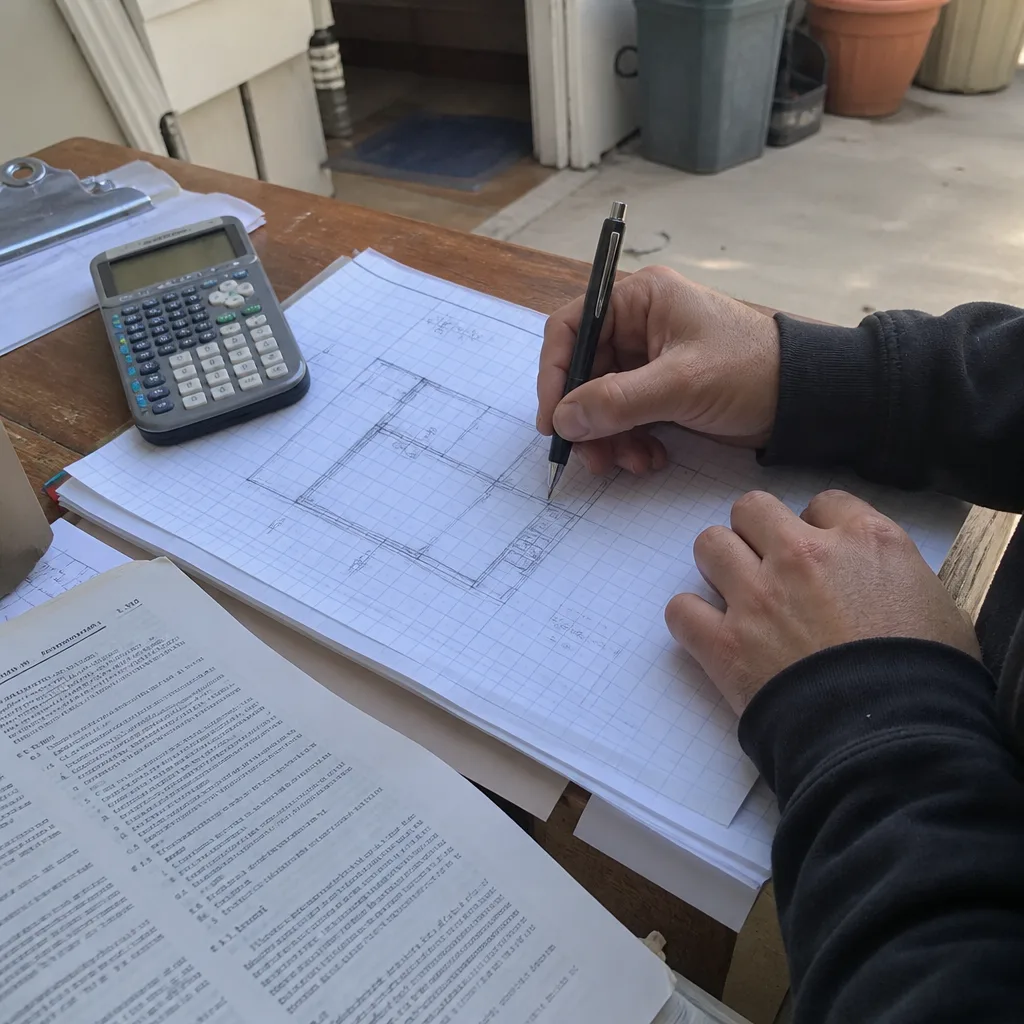
- Setback and Envelope Calculation. Using the parcel dimensions and the applicable zoning code section, we calculate your legal buildable envelope – the maximum footprint and height your ADU can reach without a variance. On corner lots, which appear frequently in the Eastside and Ramona neighborhoods, the street-side setback rules differ from interior lots and can reduce usable area by 10 to 15 percent versus what a homeowner estimates by eye. We document this calculation in writing and share it with you before any design option is drawn.
- HOA Pre-Submittal Coordination. We draft the architectural review application package: site plan, elevations, material specifications, and a one-page narrative citing California Civil Code Section 4751, which limits HOA authority to prohibit ADUs outright. For projects where we’re specifying James Hardie fiber cement siding – common in communities where the HOA requires materials that match existing homes – we include the product data sheet and color sample in the package so the board has everything it needs in one submission. Incomplete submittals are the single biggest reason ARB reviews drag past 60 days.
- City Planning Pre-Application or Ministerial Review. Riverside allows many ADUs to be approved ministerially – meaning planning staff approves them administratively without a public hearing – if they meet the objective standards. We structure every design to qualify for ministerial review where possible, because discretionary approval adds two to four months and carries appeal risk. If your parcel has a flag that requires discretionary review (a historic overlay, a specific plan, a hillside grading permit), we tell you that at step one, not after drawings are done.
- Comment Resolution. When the City issues a comment letter, we respond in writing within five business days with revised drawings or documentation. We track every open comment item in a shared log so you can see exactly what’s pending and why. Under the Haven Standard, there are no surprise fees for comment resolution rounds on items that were within the original scope – the written price you received at signing covers them.
- Compliance Documentation for Your File. When HOA approval and planning clearance are both in hand, you receive a compliance package: the HOA approval letter, the City’s ministerial approval or discretionary clearance, the recorded parcel data, and the setback calculation worksheet. This documentation matters later – at sale, at refinance, or if a neighbor ever files a complaint. Most homeowners never receive anything like it from a design-build firm. We build it into every project as a baseline, not an add-on.
HOA & Zoning Compliance Pricing in Riverside
HOA and zoning compliance is included in Ellery ADU Studio’s full design-build contract – it’s not a separate line you can add or subtract. That said, here’s what the work typically represents as a portion of total project costs, and what drives the range.
| Compliance Scenario | Typical Added Cost or Timeline Impact | Notes |
|---|---|---|
| Standard zoning review, no HOA | Included in permit set fee | Ministerial approval; most straightforward Riverside lots |
| HOA architectural review (standard) | $800 – $1,400 in drafting and coordination time | Included in contract; HOA’s own review fee is paid by homeowner separately (typically $150 – $500) |
| Discretionary planning approval | $2,000 – $4,500 additional design and documentation | Required for hillside, historic overlay, or specific plan parcels |
| Setback variance application | $3,500 – $6,000 plus City filing fees | Rare; we design to avoid this; City of Riverside variance filing fees run $1,200 – $2,800 |
| Non-conforming structure resolution | $1,200 – $3,000 depending on documentation needed | Common on pre-1980 parcels in University, Arlington, and Downtown Riverside neighborhoods |
Every cost range above is paired with a written price before any work begins – Haven Standard, Clause 1. The number in your contract is the number you pay. We don’t add a compliance fee after the fact because a comment letter came back harder than expected.
The City of Riverside’s own application fees for ADU permits – separate from our design and coordination fees – currently run approximately $3,000 to $6,500 for a standard new detached ADU, depending on square footage, Title 24 Energy Compliance requirements, and whether any grading or drainage review is triggered. We include those fee estimates in your written quote so you’re not discovering them at permit submittal.
If you already have a written estimate from another firm for ADU design or permitting work in Riverside, we offer a Free Second Opinion at no charge. Bring the quote; we’ll tell you what’s in it, what’s missing, and whether the number is realistic for your parcel. Call (951) 418-2910 to set that up.
FAQs – HOA & Zoning Compliance
Can my HOA legally block my ADU in Riverside?
No – under California Civil Code Section 4751, an HOA cannot prohibit an ADU outright or impose conditions that effectively make construction infeasible. What an HOA can do is regulate design standards: exterior materials, colors, roof form, and landscaping screening, as long as those requirements don’t increase cost beyond a reasonable threshold or reduce the unit’s size below what’s legally permitted. In practice, HOAs in Riverside communities like Orangecrest and Victoria Grove regularly exercise this design authority, which is why the architectural review package we prepare is thorough – an incomplete submission gives the board room to delay while asking for more information. Call (951) 418-2910 if your HOA has already issued a denial or a conditions letter; those are usually reversible with the right documentation.
How long does HOA and zoning approval take in Riverside?
HOA architectural review boards in Riverside typically have 30 to 60 days to respond once a complete submittal is received – state law caps their review at 60 days. City of Riverside ministerial ADU reviews currently run 30 to 45 business days for new detached units and somewhat faster for garage conversions. If your project requires discretionary planning approval, add two to four months for a public hearing cycle. The way to compress the timeline is to submit a complete, well-documented package the first time; revision cycles each cost three to six weeks in Riverside’s current queue. Our process is built around getting both tracks approved in parallel wherever the code allows it.
What if my Riverside lot doesn’t meet the standard setback requirements?
A four-foot rear and side setback applies to most ADUs in Riverside under state law. If your lot geometry makes that setback hard to meet at the size you want, there are three paths: redesign the footprint to fit within the setback, apply for a setback variance (which carries cost and timeline risk), or, for certain conversions of existing structures, use the exemption that allows the existing footprint to remain even if it doesn’t meet current setback rules. We calculate your buildable envelope at the Site Assessment stage – step one of our process – so you know the real constraints before any design dollars are spent. Call (951) 418-2910 and we can walk through your specific address.
Does Ellery ADU Studio handle zoning compliance for garage conversions and JADUs, or only new detached ADUs?
We handle HOA and zoning compliance for every ADU type we build: new detached ADUs, garage conversion ADUs, Junior ADUs and interior conversions, and any project that involves site prep or utility work. The compliance process differs by type – a Junior ADU, for example, doesn’t require a separate address but does require the owner-occupancy documentation that Riverside’s planning department reviews – but the core structure is the same. One contract, one written price, one team coordinating both the city and the HOA on your behalf. The home page has a full breakdown of the project types we cover if you want to compare before calling.
What Riverside’s Local Conditions Actually Mean for Your Approval
Riverside is a large city with a fragmented planning geography. A parcel in La Sierra sits in a different specific plan area than a parcel in Woodcrest or Canyon Springs. The hillside development regulations that apply along Box Springs Mountain don’t apply to a flat interior lot in Arlanza. The flood zone overlays near the Santa Ana River create a grading and drainage review step that doesn’t exist for parcels a mile north.
None of this is exotic – it’s just Riverside. But it means that a compliance process that worked for a neighbor’s property two tracts over may not map cleanly to yours. We’ve processed ADU permits on Riverside parcels across enough of these sub-zones to know which questions to ask at the parcel review stage, rather than finding out during plan check.
For modular and prefab ADUs – Cover and Abodu units, for instance – HOA compliance has an additional dimension: the board needs to understand that the unit arrives largely pre-built and that the exterior finish is a documented factory product, not an on-site improvisation. We’ve navigated this with Riverside-area HOAs that had never reviewed a modular submittal before. The documentation package is the same in principle; the specific exhibits are different.
Nadia Ellery reviews every compliance file before it leaves the studio. That’s not a marketing line – it’s how we catch the parcel-specific flags that a templated review process misses.
Key Takeaways
- HOA and zoning compliance are two separate approval tracks in Riverside; most ADU projects need both resolved before a building permit issues.
- California Civil Code Section 4751 limits HOA authority over ADUs, but HOAs retain real design review powers – exterior materials, colors, and screening are common conditions.
- Riverside’s current ministerial ADU review runs 30 to 45 business days; discretionary review adds two to four months.
- Standard HOA coordination costs $800 to $1,400 in design and drafting time, included in your contract. Setback variances and discretionary approvals cost more and are flagged at the parcel review stage.
- Every project receives a written price before any work starts – Haven Standard, Clause 1 – and a compliance documentation package when approvals are in hand.
- A Free Second Opinion is available on any written estimate you already have. Call (951) 418-2910.
If you’re working through the broader permit process and want to understand how compliance fits into the full sequence, the ADU Design & Permitting in Riverside page covers the complete picture from site assessment through final inspection.
To get a written price for your Riverside ADU project – including the HOA and zoning compliance work specific to your parcel – call (951) 418-2910. A live person answers. No voicemail, no callback queue. If you have a written estimate from another firm, bring it; the Free Second Opinion is exactly that.
Written by Nadia Ellery, Owner at Ellery ADU Studio Riverside, serving Riverside.