
Cover Site Prep & Utilities: The Riverside Owner’s Guide
Cover-compatible site prep and utilities installation in Riverside typically runs $8,500-$18,000 depending on utility distance, soil conditions, and whether trenching crosses existing hardscape. We stock Cover-specific utility connection hardware and schedule same-day site evaluations for active projects. Most owners discover their site prep is inadequate when Cover’s pre-installation survey flags utility capacity gaps, drainage conflicts, or setback non-compliance that the original builder overlooked.
Which Cover Models This Applies To
Cover manufactures three product lines that require distinct site prep and utility specifications: the Cover Backyard Studio (280-400 sq ft), Cover Backyard ADU (400-750 sq ft), and Cover Two-Story ADU (750-1,200 sq ft). Each ships with a proprietary utility integration kit that includes pre-plumbed wet wall panels, 200-amp electrical rough-in modules, and septic or sewer connection templates sized to the unit’s fixture count.
Identifying your Cover model matters because the Backyard Studio runs on a single 100-amp service with tankless electric water heating, while the Two-Story ADU requires 200-amp service and often triggers Riverside Public Utilities’ mandatory load calculation review. The model designation appears on your Cover purchase agreement and on a metal data plate inside the electrical rough-in panel, not on the exterior siding. We’ve seen owners assume their unit matches a neighbor’s specs only to discover at rough-in that the electrical module is undersized for the two-story variant they actually purchased.
Ellery ADU Studio Riverside is an independent design-build studio, not affiliated with Cover. We specify and coordinate Cover systems alongside Abodu and Dvele under our single-contract model, which means we source Cover-compatible utility hardware from both OEM channels and qualified aftermarket suppliers. For Cover specifically, we prefer OEM electrical rough-in modules because the proprietary bus bar geometry doesn’t always mate cleanly with generic load centers, but we regularly substitute aftermarket trenchless sewer sleeves when the OEM’s specified PVC schedule doesn’t match Riverside’s expansive clay soils.
Signs Your Cover Site Prep & Utilities Is Failing
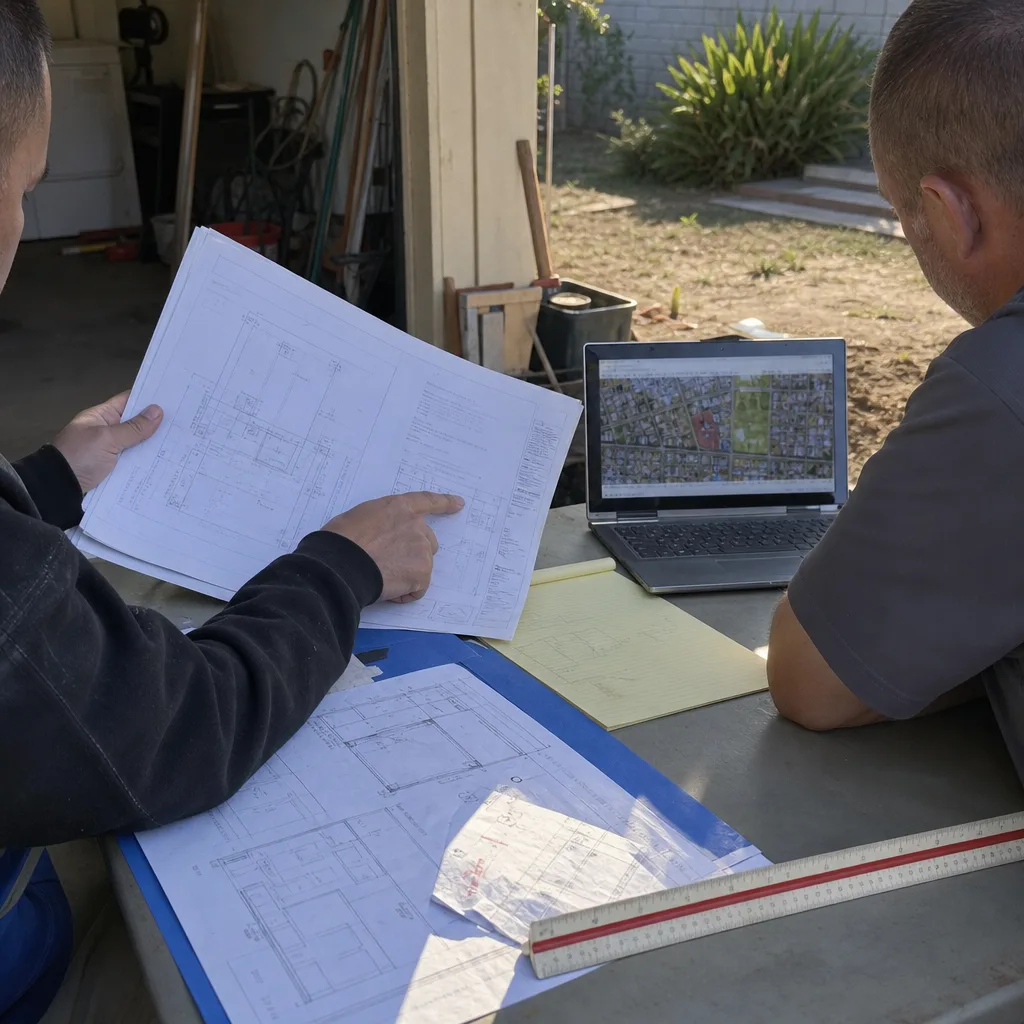
- Water pooling in the utility trench after light rain. Cover’s standard drainage specification assumes perc rates of 0.5 inches per hour or better. Riverside’s Arlington South and La Sierra soils often test at 0.2-0.3, which means the trench backfill becomes a bathtub. We catch this during pre-installation perc testing and specify engineered fill or French drain retrofit before the unit arrives.
- Electrical panel humming or breakers tripping under normal load. Cover’s integrated panel is rated for the unit’s design load, but Riverside Public Utilities requires an additional 25% capacity margin for ADU feeder calculations. If your main service is only 200 amps and the main house already draws 160, the Cover unit’s 48-amp baseline load puts you over the utility’s threshold. The symptom is nuisance tripping; the underlying issue is a service upgrade that should have been scoped before ground broke.
- Sewer backup during the first multi-fixture use. Cover’s template assumes gravity sewer at 1/4 inch per foot slope. On the sloped lots common in Hawarden Hills and Canyon Crest, we’ve seen original builders run the sewer line too shallow to maintain slope, then disguise the problem with a sewage ejector pump that wasn’t in the permit set. The pump fails, the basement-level bath backs up, and the warranty claim lands in our lap.
- Gas line pressure drop during water heater startup. Cover units spec a 1-inch gas line for the tankless heater, but Riverside’s older neighborhoods, especially north of the 91 near Wood Streets, still have 3/4-inch house lines from the 1960s. The pressure drop triggers the heater’s safety shutoff. The fix is a dedicated gas service or an upgrade to the house line, neither of which Cover’s standard kit addresses.
- Foundation settling visible at the utility penetration points. Cover specifies a 4-inch minimum slab or engineered pier foundation, but their site prep brief doesn’t always account for Riverside’s seasonal soil expansion. We’ve documented 3/4-inch differential settlement at utility sleeves on three Arlington South projects where the original pad was poured on uncompacted fill. The pipes shear at the slab edge, and the leak doesn’t surface until the drywall is already in.
Replacement Cost & What’s Included
Complete site prep and utilities replacement for a Cover unit in Riverside breaks down as follows:
| Line Item | Typical Range |
|---|---|
| Utility trenching (electric, gas, sewer) | $2,800-$5,500 |
| Electrical service upgrade (if required) | $3,200-$6,800 |
| Gas line extension or upgrade | $1,500-$3,200 |
| Sewer/septic connection and inspection | $1,800-$3,500 |
| Engineered drainage or soil correction | $1,200-$4,000 |
| Permit, inspection, and utility coordination | $1,000-$1,800 |
Total installed cost typically falls between $8,500 and $18,000, with the wide range driven by three factors: distance from utility mains (Riverside Public Utilities charges per-foot trenching rates that jump at 75 linear feet), soil conditions requiring engineered solutions, and whether the main house needs simultaneous service upgrades. Under Haven Standard Clause 1, every project receives a written, line-item price before any work begins. No change orders, no door-side surprises. Our 365-Day Done Right Promise covers the full scope, including utility performance verification at final inspection and again at the 11-month walkthrough.
DIY or Call Us?
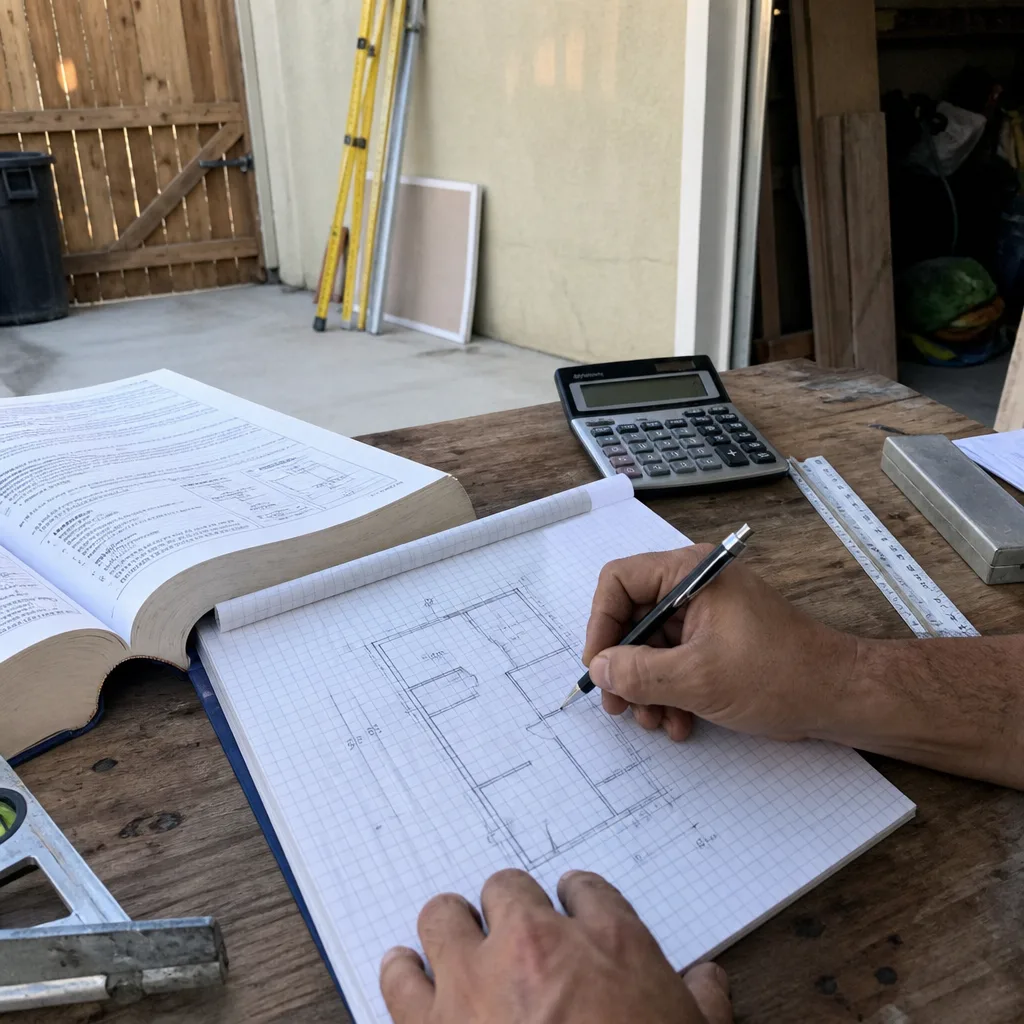
There’s a clear line between what a Cover owner can verify and what requires licensed trade work. You can safely confirm your model designation, photograph your existing utility meter and panel labels, and run a garden hose into the trench to check drainage. What you cannot safely do: extend electrical service, pressure-test gas lines, or open a sewer connection without proper permitting and backflow protection.
California Business and Professions Code requires licensed electricians for any work beyond the panel’s main breaker, and Riverside County mandates gas line pressure testing by a C-36 contractor. We’ve been called to three projects where well-meaning owners cracked the sewer lateral trying to self-install, turning a $2,800 trenching job into a $7,000 emergency excavation. The document you leave our office with should answer every question your neighbor is about to ask you. For site prep and utilities, that document starts with a perc test, a load calculation, and a written scope. Call (951) 418-2910 to schedule yours.
FAQs
Properly installed utility infrastructure lasts 30-50 years, but Riverside’s climate creates specific wear patterns. Our clay soils expand and contract with winter rain cycles, which stress rigid PVC connections; we specify flexible transition couplings at the slab edge to absorb this movement. Electrical conduit in direct sun degrades UV-rated PVC in 15-20 years, so we use rigid metal conduit for above-ground runs. Call (951) 418-2910 for an exact quote on your replacement timeline - estimates are free.
Partial repair is possible for isolated failures: a cracked sewer sleeve, a single undersized gas branch, a localized drainage clog. Full replacement becomes necessary when the failure pattern indicates systemic issues - multiple leaks, repeated pressure drops, or foundation movement affecting multiple utility penetrations. Nadia Ellery’s crew evaluates each case against the Cover installation manual and the original permit set to determine whether repair meets code or replacement is the only compliant path. Call (951) 418-2910 for an exact quote - estimates are free.
Utility replacement for a Cover unit typically requires 5-10 working days, with electrical service upgrades adding 3-5 days for Riverside Public Utilities scheduling. Trenching through existing hardscape - common in mature neighborhoods like Wood Streets or Mission Grove - adds 1-2 days for careful removal and replacement. We coordinate all utility inspections within our single-contract scope, so the owner doesn’t manage separate electrician, plumber, and inspector schedules. Call (951) 418-2910 for an exact timeline - estimates are free.
We stock Cover-specific electrical rough-in modules, gas connection kits, and sewer transition hardware at our Riverside warehouse. Aftermarket equivalents for drainage and foundation components are also available when Cover’s OEM specification doesn’t match local soil conditions. For active projects, we confirm part availability during the written estimate phase so there’s no procurement delay once permits issue. Call (951) 418-2910 to verify stock for your Cover model - estimates are free.
Written by Nadia Ellery, Owner, Ellery ADU Studio Riverside at Ellery ADU Studio Riverside, serving Riverside and nearby areas.